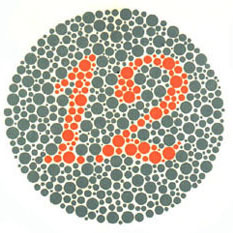
Full set or a shorter practice subset?
The default session contains all 38 plates. The shorter sessions use original plates 1–24 or 1–14 from that same set, in the same order and without changing the images. These are site-authored practice subsets, not the official 24- or 14-plate editions.
Each saved or shared record names its session length and preserves the original plate numbers. The shorter subsets leave out later plates, including the path plates, and do not provide a clinical screening result.
An observation record you can keep
One record, ready to take with you
Copy record puts your complete session into plain text. Save file downloads the same record as a text file. Share record makes a link that opens your exact answers on another device.
Plates without a recorded response stay in the record instead of disappearing from the total. “No number seen” is recorded as an observation, separately from a skipped plate. Plates 26–38 show paths rather than numeral questions; “Path seen · not traced” records only that observation. Elapsed time runs from Start test until the last plate is finished, including any time you spend going back.
Your answers stay in this tab until you choose to copy, save or share them. A new session clears the previous record from the page.
Viewing conditions for an Ishihara color test
Use even daylight and avoid reflections on the screen. Keep your screen brightness comfortably bright and steady, and switch off night mode or tinted display filters. Sit facing the screen, with the plate near eye level.
For this screen-based practice session, sit about 75 cm away and aim for about 3 seconds on a numeral plate. Printed-book instructions allow about 10 seconds for tracing a path; this page does not collect or assess a traced path. There is no forced countdown: you can take longer, skip a plate or use the keyboard at your own pace. These are viewing instructions, not a way to calibrate your screen or validate a clinical result.
What these Ishihara plates can and cannot tell you
This page uses all 38 images from a single 38-plate set. A printing year has not been established, so no year is claimed. An Ishihara color blind test is associated with red–green color vision screening; this page does not assess every form of color vision deficiency.
A screen can change how a plate appears. This page does not determine whether your answers are correct, assign a severity, or certify vision for work or driving. If you need an interpretation, take your saved record to an eye-care professional and ask about a suitable assessment.
The images have text alternatives and the controls work by keyboard. A text alternative cannot replace seeing a color pattern, so a screen reader alone cannot complete the visual task.
Questions about the Ishihara test online
Is an Ishihara colour vision test different from an Ishihara color vision test?
“Colour” and “color” are spelling variants. On this page, both describe the same practice session and the same answer record.
Can I leave a plate unanswered?
Yes. Choose Skip plate, and the finished record lists that plate as unanswered. If you see no number, choose No number seen. For a path plate, choose Path seen · not traced, No path seen, or Not sure about the path.
What if I cannot get a conclusion?
This page gives an observation record rather than a diagnostic conclusion. Save what you entered and discuss your concerns with an eye-care professional if you need a clinical interpretation.
Can someone open my shared record without taking the test?
Yes. The link opens the finished record directly, including the responses, per-plate manual descriptions, description comparisons, unanswered plates and recorded duration.