One label, different family patterns
Color Blindness Genetics: How Each Type Is Inherited
Quick answer
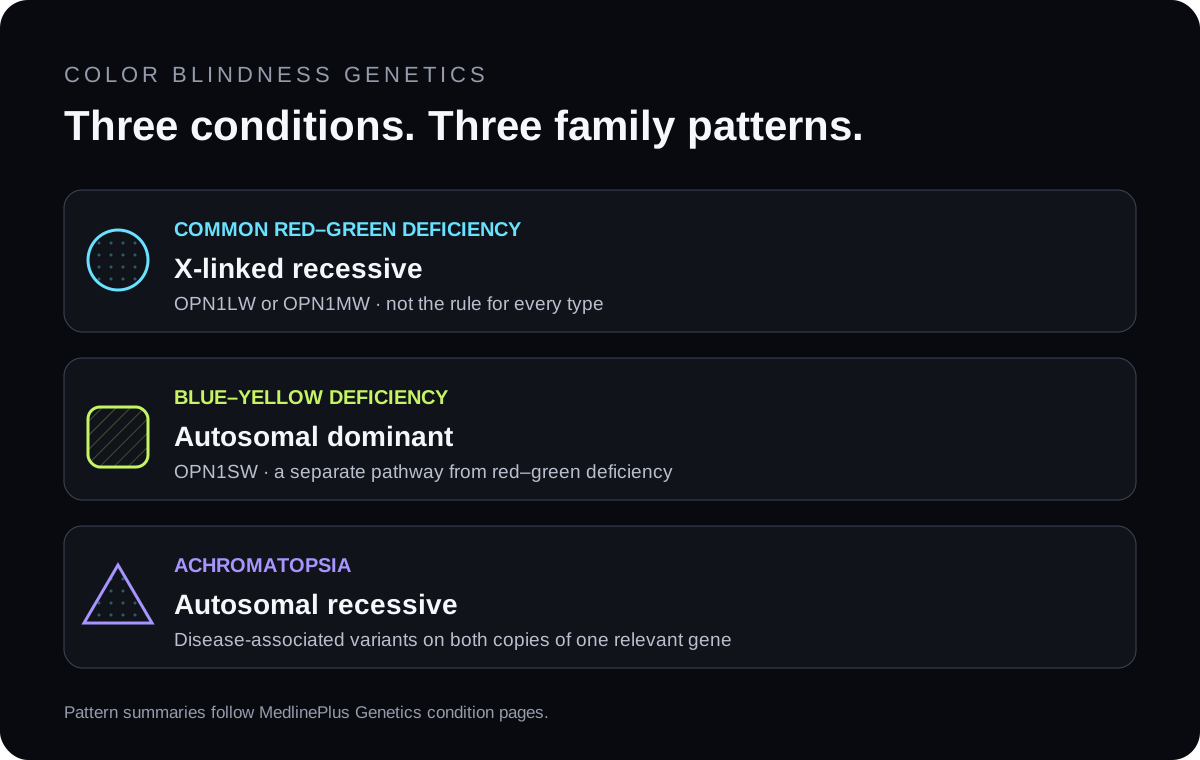
Color blindness genetics depends on the type: common red-green deficiency is usually X-linked recessive, blue-yellow deficiency is usually autosomal dominant, and achromatopsia is autosomal recessive.
MedlinePlus Genetics describes the first two pathways; its separate achromatopsia entry describes the third. A family should start with the named diagnosis because the everyday label “color blindness” does not identify one inheritance rule.
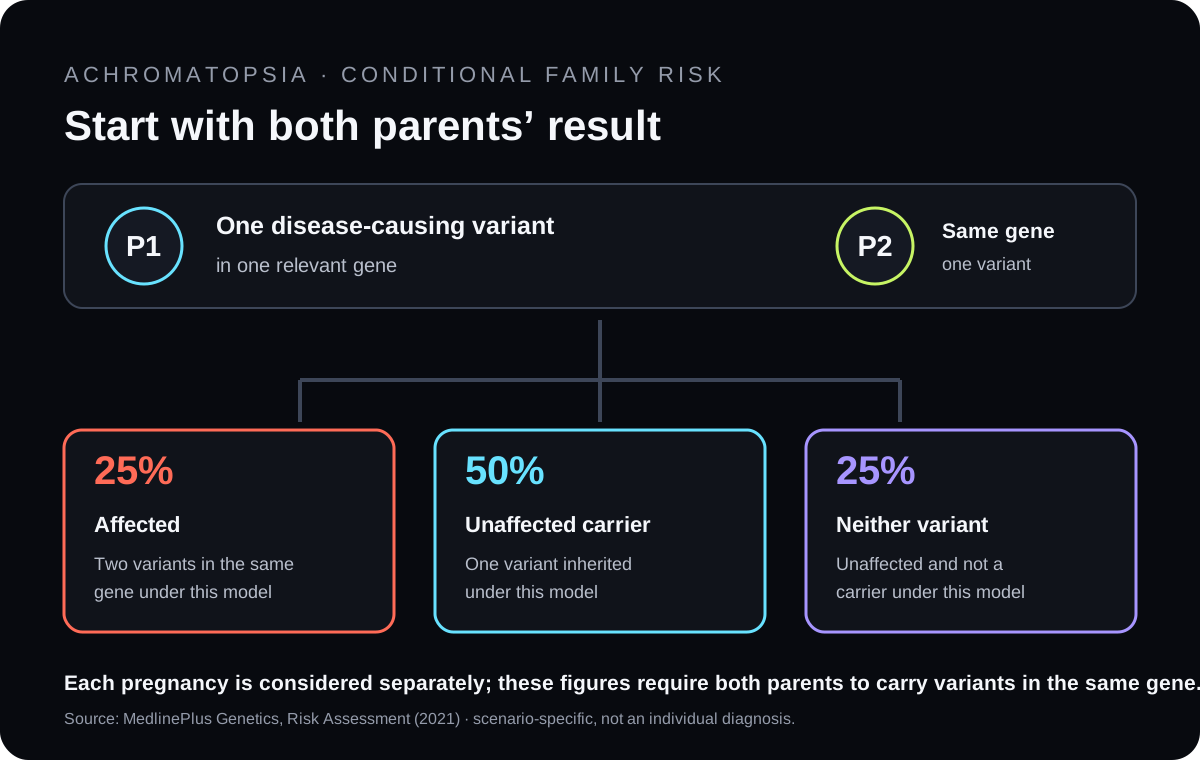
For achromatopsia, when both parents carry a disease-causing variant in the same gene, the 2021 MedlinePlus Genetics risk-assessment page gives each pregnancy a 25% chance of an affected child, a 50% chance of an unaffected carrier, and a 25% chance of a child who inherited neither variant. Those are conditional family-risk figures, not a prediction for every person who has color vision differences.
is color blindness genetic
Some color vision conditions are inherited, but the family pattern changes with the condition. MedlinePlus Genetics describes red-green deficiency, blue-yellow deficiency, and blue-cone monochromacy as distinct conditions; achromatopsia has its own gene and inheritance overview.
That distinction matters before anyone draws a family tree: evidence for an X-linked red-green condition does not establish the inheritance of an achromatopsia diagnosis.
is color blindness hereditary
For common red-green color vision deficiency, MedlinePlus Genetics describes an X-linked recessive pattern involving OPN1LW or OPN1MW. This is the familiar family pattern many people mean when they ask whether color blindness is hereditary, but it is not a rule for every type.
A December 2002 archived explainer by optometrist Terrace L. Waggoner also limited its traditional X-linked explanation to red-green deficiency. It explicitly separated that explanation from blue-yellow deficiency, so its example should not be extended to other diagnoses.
Waggoner’s archived example says an affected daughter in that red-green model would have an affected father and a mother who is affected or a carrier. Treat this as a historical, condition-specific explanation; a family’s own diagnosis and test results still matter.
is color blindness dominant or recessive
There is no single dominant-or-recessive answer for all color blindness. MedlinePlus Genetics describes blue-yellow deficiency as autosomal dominant, while its separate achromatopsia entry describes an autosomal recessive pattern.
In the blue-yellow pathway, the relevant gene named by MedlinePlus Genetics is OPN1SW. The source describes the pattern as autosomal dominant; it does not make the red-green X-linked rule applicable to that condition.
MedlinePlus Genetics describes achromatopsia as a recessive condition in which disease-associated variants affect both copies of one relevant gene. Its inheritance should not be inferred from a relative’s red-green deficiency.
color blind hereditary
The phrase “color blind” can hide which branch of a family history is relevant. First record whether the diagnosis is red-green deficiency, blue-yellow deficiency, or achromatopsia, then use the inheritance description for that named condition.
For achromatopsia, MedlinePlus Genetics says the parents of an affected person each carry one altered copy of the relevant gene and are typically unaffected. That carrier-parent description is specific to the recessive achromatopsia pathway.
color blindness inheritance
The 2018 GeneReviews chapter on achromatopsia lists six associated genes: ATF6, CNGA3, CNGB3, GNAT2, PDE6C, and PDE6H. Its molecular diagnosis requires disease-causing variants on both copies of one listed gene, rather than one generic “color blindness gene.”
The gene name is useful family information because two variants must be interpreted in the same gene for this recessive model. A diagnosis based only on a gray-scale appearance does not identify which of the six genes is involved.
The 2018 GeneReviews chapter gives siblings of a person with achromatopsia a 25% chance of being affected at conception under the stated family model. It separately gives a 50% chance of being an unaffected carrier and a 25% chance of being unaffected and not a carrier.
The 2021 MedlinePlus Genetics risk-assessment page gives the same 25%, 50%, and 25% distribution for each pregnancy when both parents are carriers of variants in the same gene. The condition and parental-carrier assumptions belong beside the numbers whenever they are repeated.
Those percentages do not describe every family with a history of color vision deficiency. They apply to the specified autosomal recessive carrier pairing, and each pregnancy has its own set of chances.
how is color blindness inherited
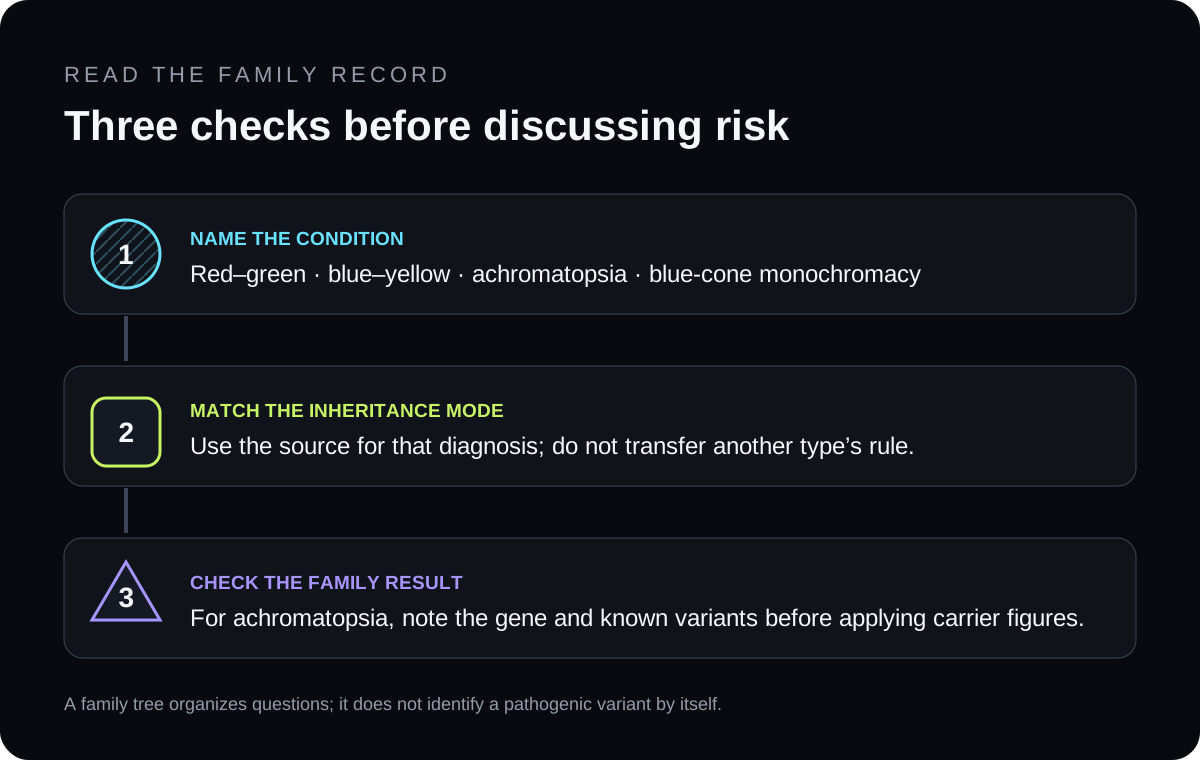
Read a family history in three steps: identify the exact diagnosis, identify the inheritance mode attached to it, and check whether a family genetic result names the relevant variant. This keeps three different pathways from being blended into one family rule.
For achromatopsia, GeneReviews says carrier testing for at-risk relatives can be offered when the family’s disease-causing variants are already known. The same chapter lists prenatal and preimplantation genetic testing for pregnancies at increased risk when those variants have been established.
Those options depend on a confirmed family result; they cannot supply a variant-specific risk when the gene and variants have not been identified. A qualified eye-care or genetics professional can explain which evaluation fits the family’s records.
color blindness and genetics
Blue-yellow deficiency, often discussed as tritan color vision deficiency, is not the same inheritance pathway as common red-green deficiency. MedlinePlus Genetics links it to OPN1SW and describes it as autosomal dominant.
The University of Arizona hereditary eye disease handout describes tritanopia as an autosomal dominant condition and notes that expression can vary. Keep that source’s tritanopia scope attached to its description rather than treating it as a statement about every blue-yellow complaint.
Blue-cone monochromacy also needs a separate label. MedlinePlus Genetics describes it as an X-linked condition and notes that it is sometimes considered a form of achromatopsia; it is not interchangeable with the autosomal recessive achromatopsia pathway described on the separate condition page.
is color blindness more common in males
The male-linked pattern applies to common red-green deficiency because its usual inheritance is X-linked recessive. MedlinePlus Genetics says that this form affects males more often.
That sex-linked explanation is a supporting detail, not a shortcut for all color vision diagnoses. The blue-yellow and achromatopsia descriptions above follow different inheritance modes.
color blindness inheritance pattern
| Named condition | Source-described inheritance pattern | Boundary to keep |
|---|---|---|
| Common red-green deficiency | MedlinePlus Genetics describes an X-linked recessive pattern involving OPN1LW or OPN1MW. | The same source separates this condition from blue-yellow deficiency and blue-cone monochromacy. |
| Blue-yellow deficiency | MedlinePlus Genetics describes an autosomal dominant pattern involving OPN1SW. | This source describes a separate pathway from the red-green X-linked pattern. |
| Achromatopsia | MedlinePlus Genetics describes an autosomal recessive pattern involving disease-associated variants in both copies of a relevant gene. | Its separate condition entry distinguishes achromatopsia from blue-cone monochromacy. |
| Blue-cone monochromacy | MedlinePlus Genetics describes an X-linked condition. | The same source notes that it is sometimes considered a form of achromatopsia, while the separate achromatopsia entry describes an autosomal recessive pathway. |
Use the diagnosis column before comparing relatives. A shared everyday label does not make the inheritance columns interchangeable.
how is color blindness passed down
For a family discussion, bring the exact diagnosis, which relatives have it, and any genetic report that names a gene and variants. The pattern can then be matched to the correct condition rather than guessed from who sees which colors.
For an achromatopsia family, ask whether the diagnosis has been confirmed and whether both relevant variants are known before applying carrier-risk figures. For a red-green or blue-yellow diagnosis, ask the eye-care professional which named condition the record supports.
A family tree can help organize questions, but it cannot by itself identify a disease-causing variant. This page summarizes published inheritance descriptions; it does not diagnose a reader or calculate a personal family risk.
MedlinePlus Genetics, “Color Vision Deficiency,” https://medlineplus.gov/genetics/condition/color-vision-deficiency/ .
MedlinePlus Genetics, “Achromatopsia,” https://medlineplus.gov/genetics/condition/achromatopsia/ .
MedlinePlus Genetics, “Risk Assessment,” https://medlineplus.gov/genetics/understanding/inheritance/riskassessment/ .
GeneReviews, “Achromatopsia,” last updated September 20, 2018, https://www.ncbi.nlm.nih.gov/books/NBK1418/ .
University of Arizona, “Colorblindness: Tritanopia,” https://disorders.eyes.arizona.edu/handouts/colorblindness-tritanopia .
Terrace L. Waggoner, archived December 2002 page, https://web.archive.org/web/20021208031155id_/http://members.aol.com/nocolorvsn/color3.htm .
Inheritance descriptions retain the scope and conditions stated by their cited sources.