Can you be colorblind in one eye?
Yes—color vision can be impaired in one eye, and the difference between eyes can be partial rather than a complete loss of color. Unilateral cone case · Genetic case abstract
If you think you may be colorblind in one eye, use the comparison sheet below to record the difference for an eye appointment.
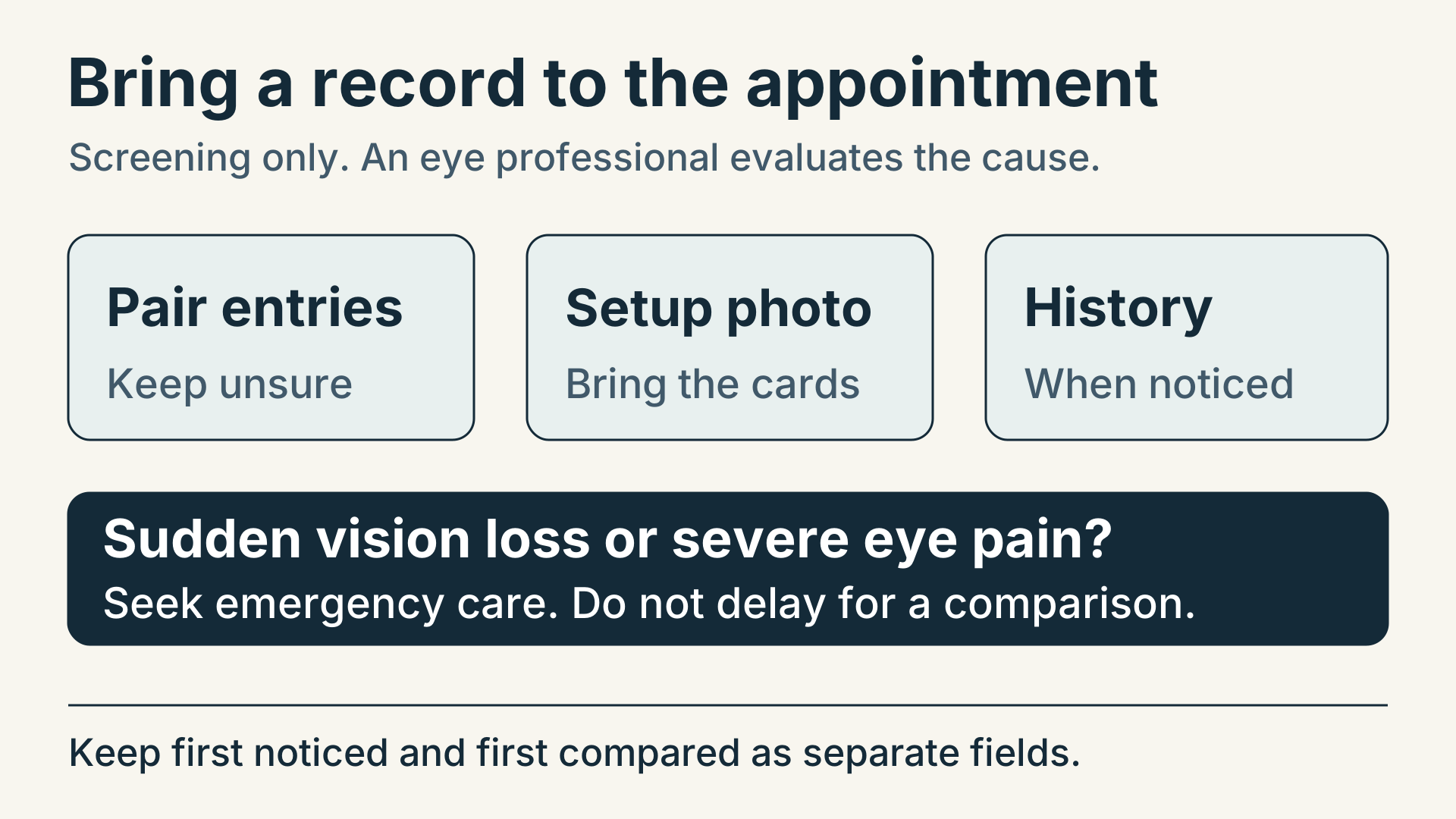
Sudden inability to see from either eye or sudden severe eye pain needs emergency care; do not delay for a home comparison. NHS emergency guidance
Inherited, acquired, and what a comparison can tell you
| Inherited or congenital | Acquired changes | How to check |
|---|---|---|
| Common inherited red–green deficiencies are usually bilateral, but exceptionally rare genetic cases with pronounced differences between eyes have been reported. Original experimental paper · Genetic case abstract In an ARVO case abstract, a woman tested as a protanope with her left eye and had a very mild deficiency in her right. Case abstract The community comment below proposes chimerism, but the case abstract did not establish it as the cause. Original comment · Case abstract |
Optic nerve: A primary study of optic neuritis documented color changes, blurred vision and painful eye movements in its patients. Original clinical study Trauma: A clinical trial of traumatic optic neuropathy assessed color vision changes after injury. Original trial abstract Medication: Ethambutol toxicity usually affects both eyes, but a case report documented left-eye color difficulty before the right eye also deteriorated. Original case report abstract Brain: A report comparing brain lesions describes color loss affecting a visual hemifield, which concerns part of the scene rather than one eye alone. Original report abstract |
An observation sheet cannot identify which of these causes applies to you. In the published cone case, routine examination was unrevealing and specialized retinal tests established the abnormality. Original case abstract |
The community discussion contains both of these comments:
"Colorblindness affects the color receptors in the retina, and is genetic. So to be colorblind in just one eye would require something very unusual such as chimerism"
— u/readams, r/askscience, Can you be colorblind in just one eye?
"There are definitely cases of unilateral colorblindness reported."
— u/ron_leflore, r/askscience, Can you be colorblind in just one eye?
Compare each eye and keep a usable record
This is an informal screening worksheet, not a validated diagnostic test. It has no pass mark, severity grade or probability estimate.
Cards and pair list
Choose colored cards of the same size and shape, with roughly similar brightness. Give each card a neutral ID on the back, such as A, B or C, and keep that label hidden while looking at the colored face. List the pairs you intend to compare by ID before you cover either eye.
Setup record
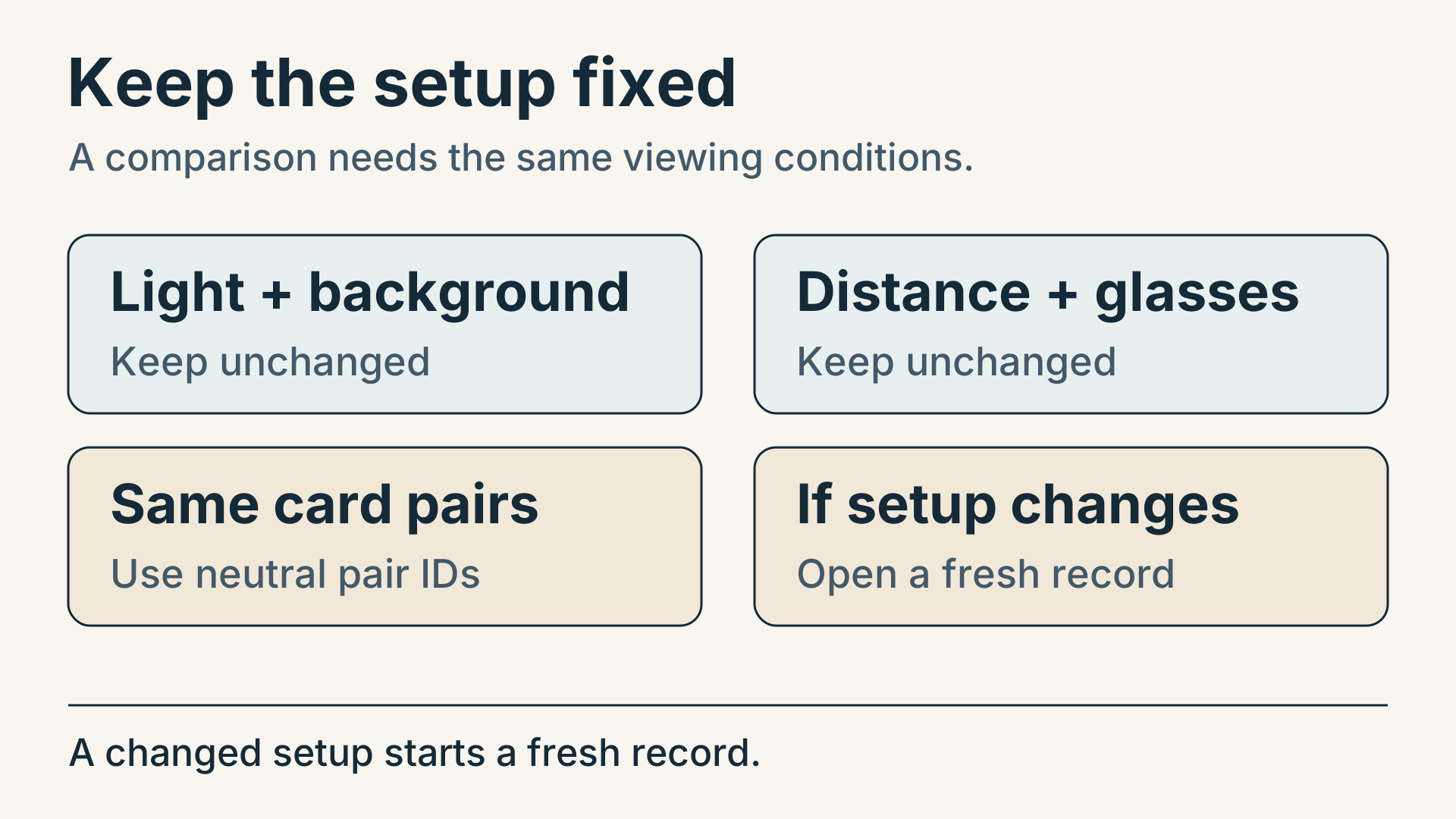
Keep the light, background, card positions and viewing distance unchanged between eyes. Take a setup photo and write a setup line naming the light source, background and whether you are wearing your usual glasses. If the setup changes, open a fresh record instead of appending the new observation to the old one.
Right-eye entry
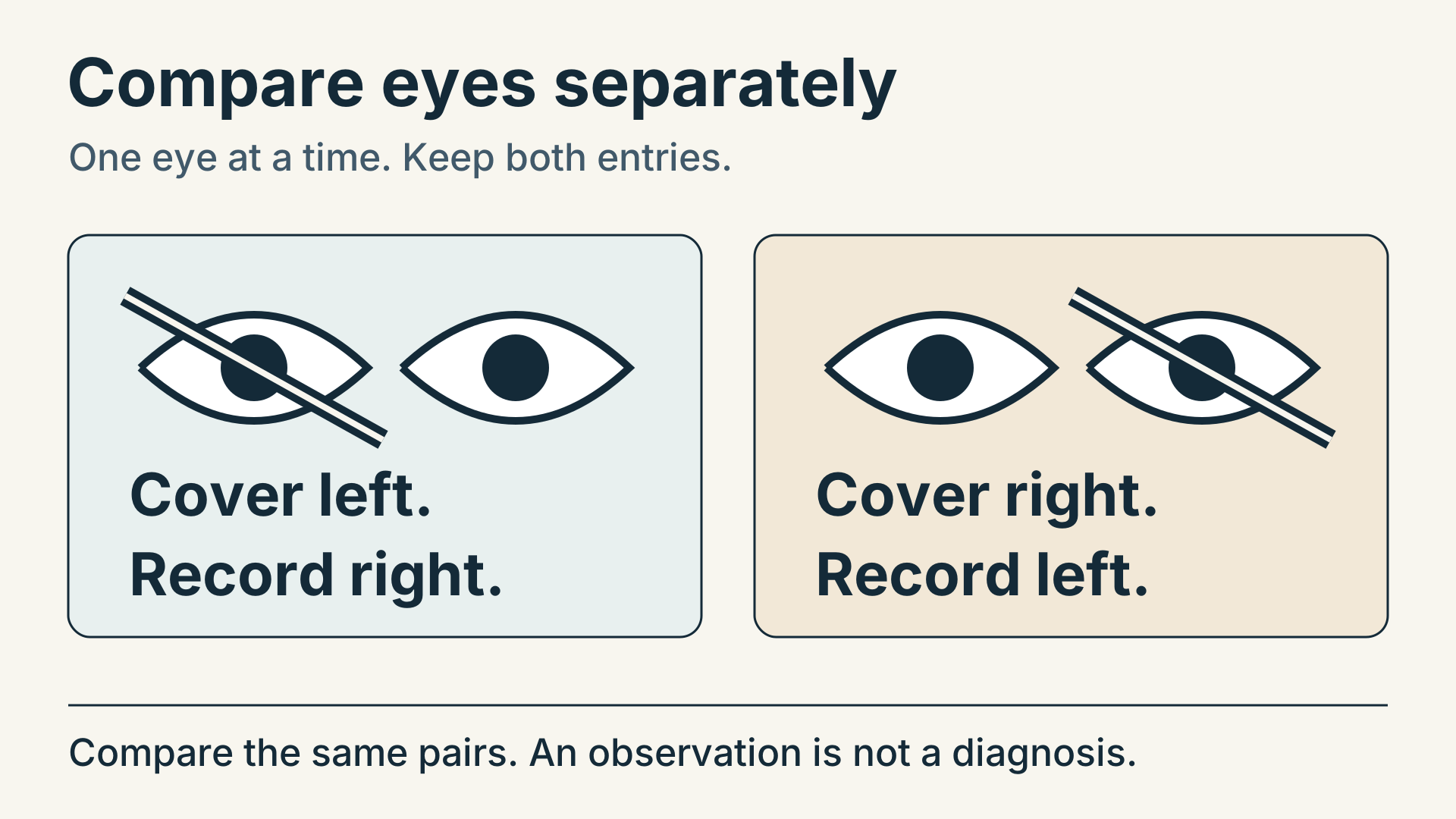
Cover your left eye without pressing on it and compare the pairs with your right eye. Give each pair an entry of distinct, similar, indistinguishable or unsure in the Right eye column. Keep unsure separate from grayish: unsure records uncertainty, whereas grayish records an appearance. Attach appearance notes to a card ID, so that a note about A does not become a note about its neighbor.
Left-eye entry and position check
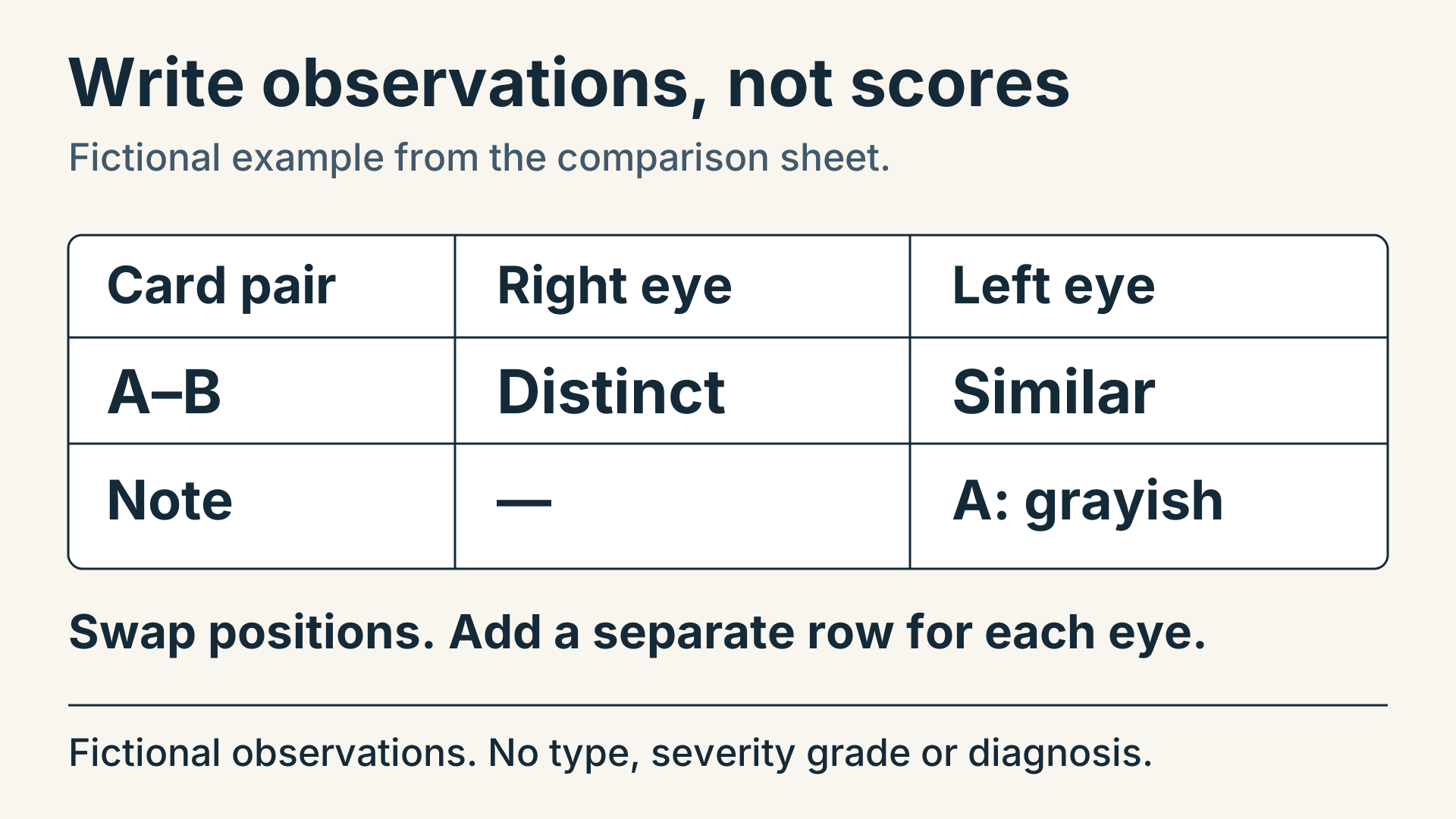
Cover your right eye and compare exactly the same pairs with your left eye. Write the left-eye entries before checking them against your right-eye entries, then leave both sets intact if they disagree. Swap the cards within each pair and add a separate swapped-position row for each eye. Note whether an appearance follows card A or stays at the same position on the table.
Appointment record
Summarize differences by pair ID and leave unsure entries visible instead of turning them into wrong answers. Keep pairs with no apparent difference in the sheet rather than reporting only the surprising rows. Add when you first noticed the difference, whether it seems new or longstanding, and relevant medication or injury history. Keep first noticed and first compared as separate fields rather than treating the day of this exercise as the start of the difference. Bring the cards or ID key, setup photo and completed sheet together.
Copy this record
Setup: Light source ___ | Background ___ | Viewing distance ___ | Usual glasses ___
History: First noticed ___ | First compared ___ | New or longstanding ___ | Relevant medicines or injury ___
| Card pair | Layout | Right eye: distinction / appearance note | Left eye: distinction / appearance note |
|---|---|---|---|
| A–B | Original | ___ / ___ | ___ / ___ |
| A–B | Swapped positions | ___ / ___ | ___ / ___ |
| A–C | Original | ___ / ___ | ___ / ___ |
| A–C | Swapped positions | ___ / ___ | ___ / ___ |
Worked example — fictional observations
In a fictional entry, A–B is distinct with the right eye and similar with the left. The left-eye note identifies A as grayish, and the swapped-position row records that the note still follows A. The appointment summary preserves that A–B difference without assigning a color blindness type or a cause.
Does pink looking gray mean only pink is affected?
"As Deuteronop, I tend to see pink sort of grey."
— u/lanshark974, r/ColorBlind, Is it possible to only be colour blind to one colour?
"No, because colorblindness affects multiple colors at once. If you saw pink as grayish (like another commenter mentioned), you'd also have trouble telling apart similar colors like red-green."
— u/Nice-Watercress9181, r/ColorBlind, Is it possible to only be colour blind to one colour?
Is it possible to be color blind in one eye?
Yes—color vision can be impaired in one eye. Use the comparison record above to note what each eye sees separately; it is a screening worksheet, not a diagnosis.
Choose a test and understand its limits
Use our guide to color vision tests to explore screening options, then read how the types of color vision deficiency differ.
This page is educational and does not provide a diagnosis.